When people talk about protein, the same question comes up again and again:
“Which protein is better?”
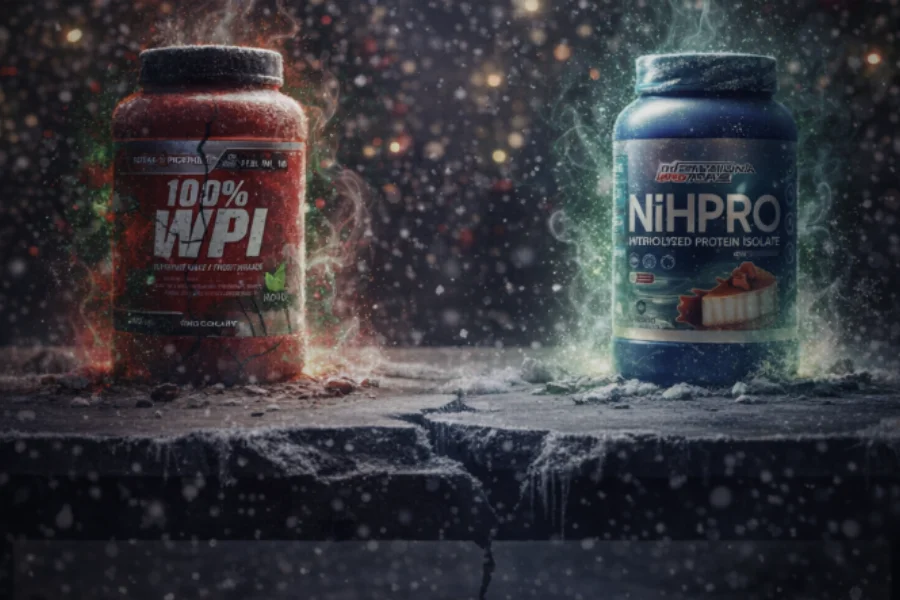
“Is whey isolate better than a dairy-free protein?”
“Should I switch to a new protein powder?”
The honest answer is simple:
It’s the wrong question.
The real question isn’t which protein is universally best, but which protein is best for you, your body, and your lifestyle.
Stop Asking “Which Protein Is Better?”
There is no single perfect protein that works for everyone.
Some people feel great on whey isolate.
Others feel bloated, uncomfortable, or simply don’t want dairy in their diet.
Some prefer plant-based options.
Others want something cleaner, lighter, and easier to digest.
So instead of trying to crown one winner, it’s much more useful to ask:
- How does this protein powder make me feel?
- Does it support my digestion?
- Does it fit my ethics, preferences, or beliefs?
- Does it work with my daily routine and goals?
Once you start asking those questions, the whole conversation around protein becomes more personal and much more helpful.
What Protein Supplements Are Really For
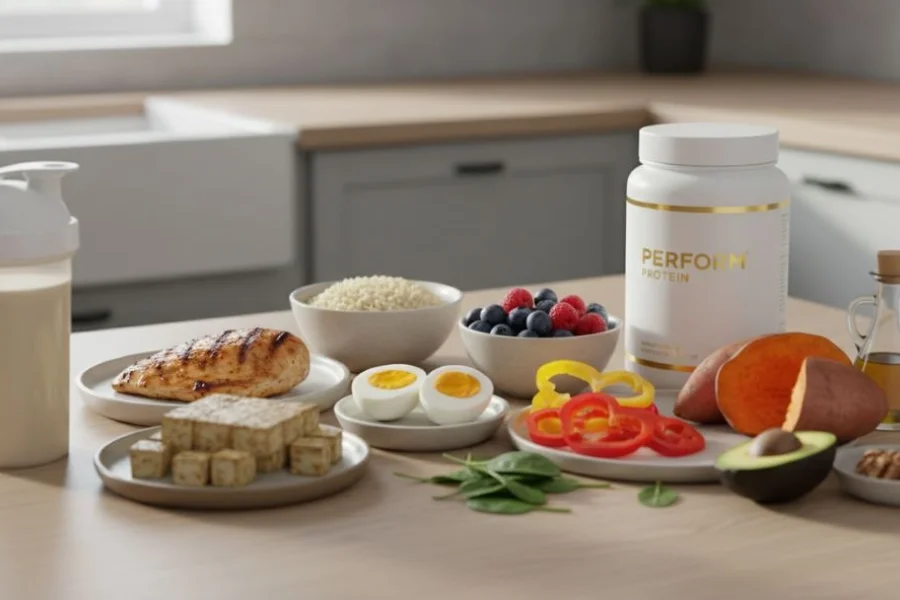
No matter which type you choose whey isolate, plant-based, or a hydrolyzed protein isolate all quality protein supplements have one main job:
They are tools to help you reach your daily protein intake when whole foods aren’t enough.
They are not:
- A replacement for real meals
- A shortcut to ignore fruits, vegetables, good fats, or balanced carbs
- Magic powders that override poor nutrition
Your body still needs:
- Whole-food protein sources (meat, eggs, fish, tofu, lentils, etc.)
- Colorful fruits and vegetables
- Quality carbohydrates
- Healthy fats and hydration
A protein powder is just there to fill gaps for example:
- You’re busy and don’t have time to cook
- You’re traveling
- You train hard and need extra protein around workouts
- You struggle to hit your protein target through food alone
Once you see supplements as support, not substitute, it becomes much easier to choose the right one.
Whey Isolate: Great, But Not for Everyone
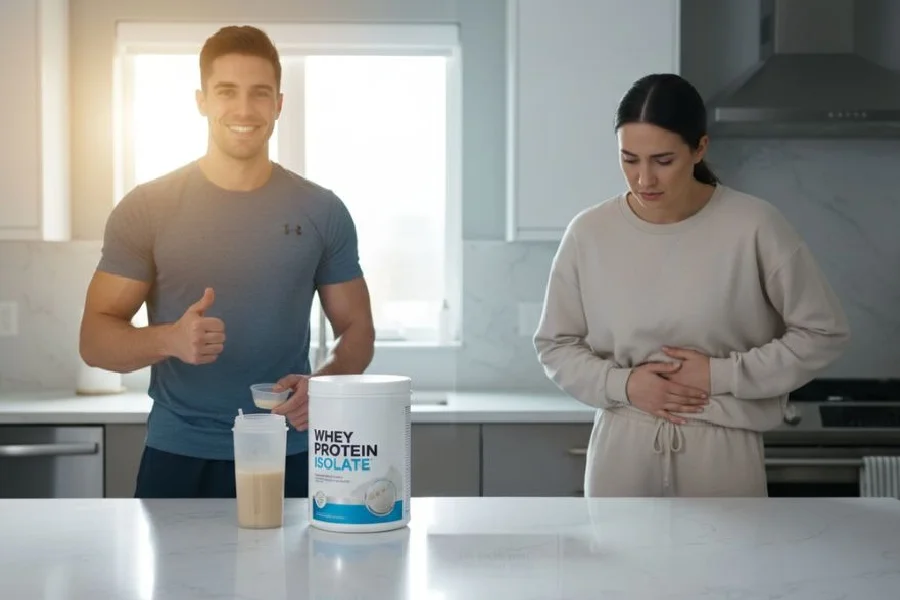
Whey isolate is popular for good reasons:
- It’s a complete protein with an excellent amino acid profile
- It generally mixes well and tastes creamy
- It supports muscle recovery and performance
- It’s widely available
But it’s not perfect.
For many people, whey can cause:
- Bloating or digestive discomfort
- Issues due to lactose or dairy sensitivity
- A feeling of heaviness after drinking a shake
And for others, there are personal or ethical reasons to avoid dairy entirely.
So while whey isolate can be a great option, it is not automatically better for everyone.
Plant Proteins: Better Fit for Some, Not All
Plant-based proteins (like pea, rice, or soy) are important options, especially for vegan or dairy-free lifestyles. But they also come with trade-offs:
- Some plant proteins are gritty, thick, or earthy in taste
- The amino acid profile is often less complete compared to dairy proteins
- Many people find the mouthfeel less enjoyable
For some people, plant-based is the right choice.
For others, they want something dairy-free but closer to the taste and performance of whey.
That’s where a new type of protein comes in.
A New Option: Dairy-Free Hydrolyzed Protein Isolate (NiHPRO®)
Instead of choosing between only dairy or plant, NiHPRO® is positioned as a “3rd Category of Protein” Protein For EveryBODY™.
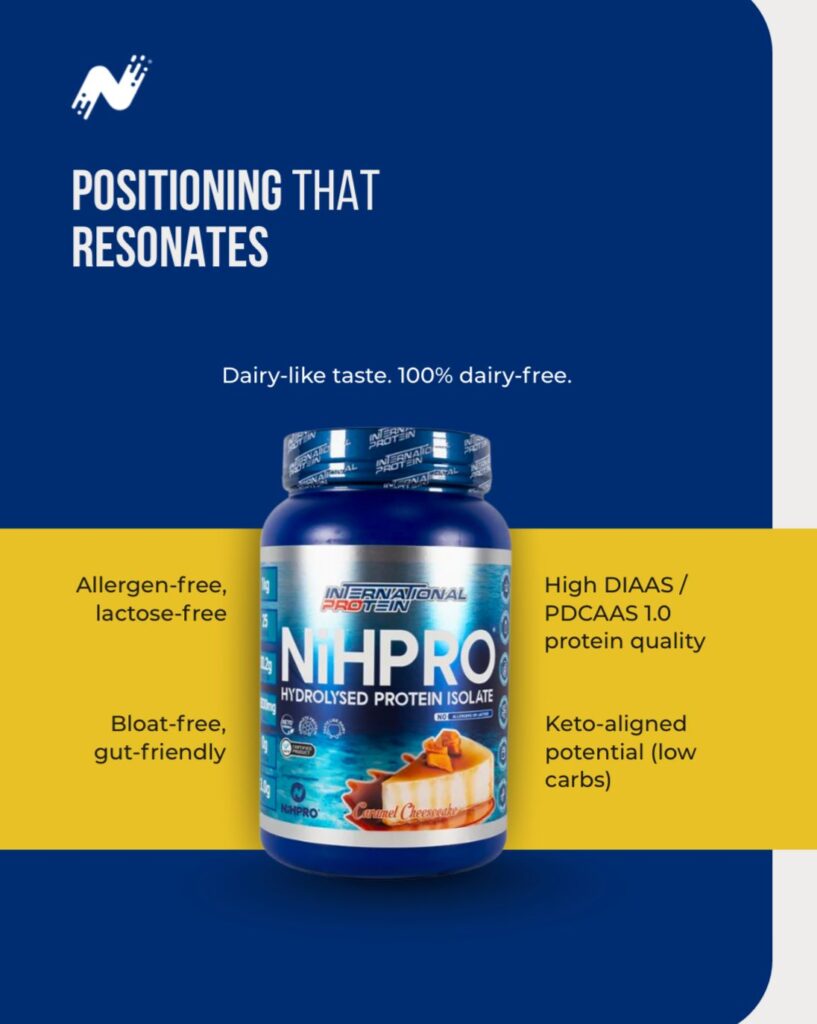
Hydrolyzed NiHPRO® Protein Isolate is:
- A high-purity, high-performance hydrolyzed protein isolate
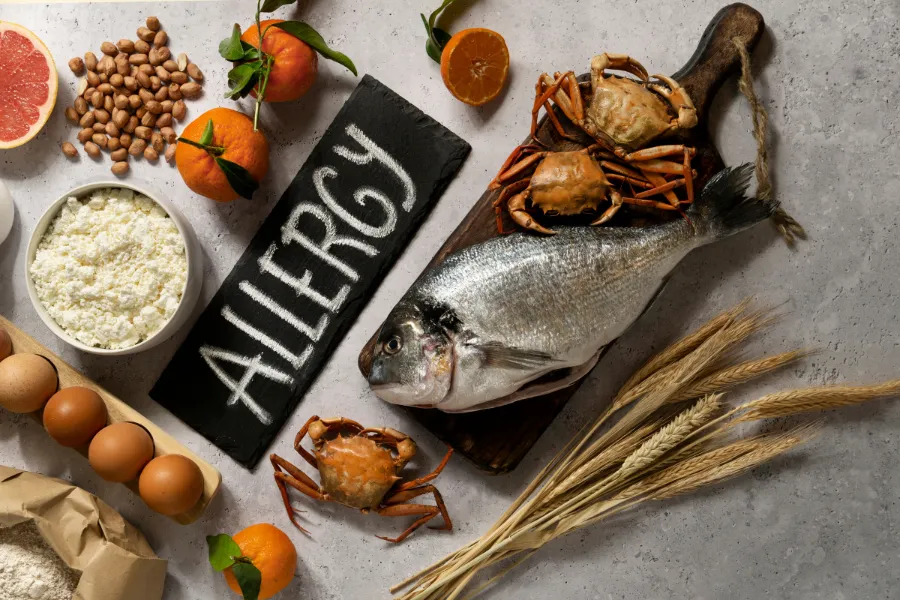
- 100% lactose-free, allergen-free, sugar-free, and GMO-free
- Crafted using Advanced Precision Hydrolysis™ (APH™) and Molecular Protein Infusion™ (MPi™) technologies for superior solubility, taste, and digestion
- Designed to deliver a dairy-like taste and mouthfeel while remaining completely dairy-free
In simple language:
NiHPRO® is a dairy-free hydrolyzed protein isolate that behaves like a premium whey isolate but without the lactose, dairy, or major allergens.
Performance: More Than Just a Nice Flavor
Taste matters, but performance matters too.
Hydrolyzed NiHPRO® Protein Isolate has been built with serious performance in mind:
- DIAAS around 116 – higher than many whey protein isolates, which means excellent digestible amino acid quality
- PDCAAS of 1.0 – the highest possible score for protein quality
- Equal L-leucine per serving compared to whey, supporting muscle protein synthesis and lean muscle building
- Designed for high solubility, smooth mixing, and clean taste, without chalkiness or grit
So when you see NiHPRO® described as “next-generation dairy-free protein”, it’s not just about being free from lactose or allergens. It’s about matching or surpassing many traditional proteins in quality, digestibility, and performance.
How to Choose the Right Protein for You
Instead of arguing over which protein is “right” or “wrong,” it’s more helpful to ask:
1. How does it feel in your body?
Do you feel:
- Light and energized after your shake?
- Or heavy, bloated, or uncomfortable?
If you struggle with traditional dairy proteins, a dairy-free hydrolyzed protein isolate like NiHPRO® may be a better fit.
2. Does it match your lifestyle and beliefs?
Ask yourself:
- Do you want to avoid lactose or major allergens?
- Do you prefer non-dairy, non-soy, or GMO-free ingredients?
- Do you want one protein that works for both dairy and non-dairy consumers in your household or brand?
If the answer is yes, NiHPRO® is specifically designed to bridge that gap friendly to both dairy consumers and non-dairy consumers.
3. Does it support your goals?
Whether your goal is:
- Building muscle
- Supporting recovery
- Staying lean
- Or simply hitting your protein targets
You want a high-quality protein powder that:
- Has a strong amino acid profile
- Is easy to digest
- Fits into busy days without stress
A hydrolyzed protein isolate like NiHPRO® is built for exactly this kind of performance-driven use.
4. Do you enjoy drinking it?
This is often ignored but it’s critical.
If you don’t enjoy your protein powder:
- You won’t use it often
- You won’t stay consistent long term
A protein that tastes creamy, mixes smoothly, and feels good automatically becomes easier to build into your daily routine whether in shakes, oats, yoghurt, or smoothies.
The Real Question to Ask About Protein
So instead of asking: “Which protein is better – whey or something else?”
A better question is: “Which protein aligns with my digestion, my routine, my preferences, and my goals?”
For some, that answer may still be whey isolate.
For many others, especially those wanting dairy-free, allergen-free, high-performance nutrition, the answer may be a next-generation hydrolyzed protein isolate like NiHPRO®.
NiHPRO®: Protein For EveryBODY™
NiHTEK® created Hydrolyzed NiHPRO® Protein Isolate to be more than just another supplement. It’s designed to be:
- A clean, modern alternative to both dairy protein and traditional plant protein
- A “3rd Category of Protein” that brings together taste, performance, and inclusivity
- Truly Protein For EveryBODY™ dairy-friendly, vegan-friendly, allergen-free, and performance-focused
If you’re a brand, formulator, or simply someone who cares about what goes into your shaker, it may be time to move past the old “which protein is better?” debate and start exploring which protein is better for you.