
Most people don’t quit protein because they stopped caring about muscle, recovery, or health. They quit because the product stops feeling worth it.
A few days of bloating. A stomach that feels heavy. A shake that sits like a rock. A “healthy habit” that quietly becomes a weekly chore instead of a daily routine.
That’s the moment where protein stops being a macro and becomes a tolerance problem.
And it’s exactly why low-FODMAP protein and FODMAP-free protein is moving from a niche clinical concept into mainstream performance nutrition. Not because consumers want to read a textbook on fermentable carbohydrates, but because they want a protein they can keep using without paying for it afterward.
That’s where NiHPRO® earns its place.
Why “FODMAP-Free” matters in protein (especially now)

FODMAPs (fermentable carbs that can trigger GI symptoms in sensitive people) aren’t inherently “bad.” The issue is practical: many modern nutrition products unintentionally stack multiple digestive stressors in the same serving.
Think about what’s commonly inside protein powders and high-protein foods:
- Lactose-based ingredients or dairy residues
- Chicory root fiber / inulin
- Sugar alcohols and “better-for-you” sweeteners
- Thickeners and gums used to fix texture
- Plant protein fractions that don’t always sit well
Individually, these might be fine for some consumers. Together especially in a post-workout state, on an empty stomach, or during periods of calorie restriction they can become the reason people stop using the product altogether.
FODMAP-free protein isn’t a marketing flourish. It’s a way to reduce the odds that your “daily protein” becomes a “sometimes protein.”
And in the current market, “sometimes” isn’t good enough. The brands that win are the brands that build habits and habits require digestive comfort.
NiHPRO®: protein for more bodies, not just more grams
NiHTEK®’s “Protein For EveryBODY™” framing lands because it reflects real-world behavior. The fastest-growing protein consumer isn’t necessarily a competitive athlete. It’s the everyday person who wants to:
- Maintain muscle while losing weight
- Support healthy aging
- Get more protein without dairy
- Simplify nutrition into repeatable habits
In that world, the first job of a protein isn’t to look impressive on a label. It’s to be usable day after day.
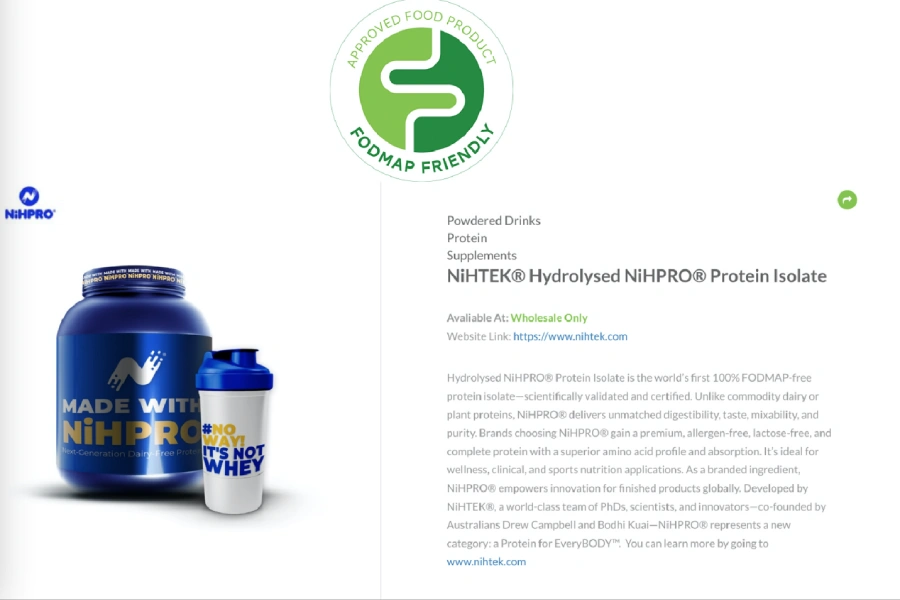
NiHPRO® is positioned as an allergen-friendly, non-dairy protein system that’s engineered for modern formulation needs. But the key digestive headline is this: NiHPRO® is FODMAP Friendly certified as a hydrolysed protein isolate, which gives brands a rare kind of credibility in the digestive-comfort conversation.
That single detail changes how you can speak to the market calmly and confidently.
Because when consumers feel unsure about digestion, they don’t want hype. They want reassurance that the product won’t derail their day.
What “FODMAP Friendly certified” actually gives a brand
Most “easy digestion” claims are vague. Consumers have heard them too many times. The moment your product causes discomfort, the claim feels dishonest even if your intentions were good.
Certification helps because it replaces “trust me” with “verified.”
A FODMAP certification signals that the ingredient has been assessed against defined criteria. It also gives you something incredibly valuable as a marketer and formulator: a way to communicate digestive suitability without leaning on fear, overpromising, or medical language.
That’s the right tone for 2026: confident, science-grounded, and respectful of consumer experience.
And in a category where churn is high, credibility is not a nice-to-have. It’s conversion.
Why FODMAP-Free protein isn’t only for “sensitive stomachs”
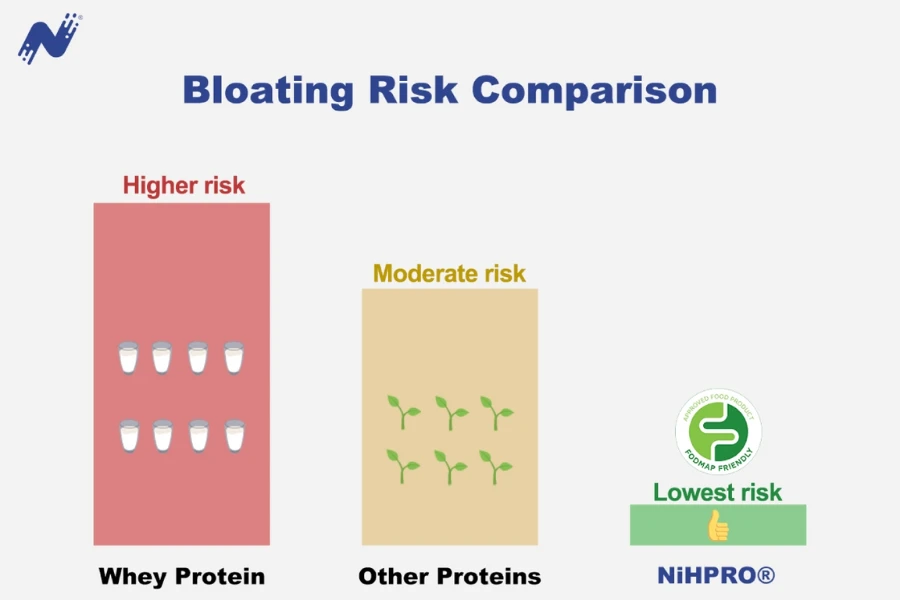
Here’s the surprising part: FODMAP-free protein positioning is no longer just for IBS-specific audiences.
It’s becoming relevant for three huge consumer shifts:
1. Higher protein frequency
When someone uses protein once a week, tolerance issues feel occasional. When they use it daily, tolerance becomes decisive.
That’s the real change: protein is shifting from a “supplement” to a routine. And routines only survive when the experience is smooth.
2. Calorie restriction and appetite-focused lifestyles
Many consumers are eating smaller meals and trying to preserve lean mass. Smaller meals mean each protein serving carries more weight. If one serving feels “too much,” the habit collapses.
This isn’t about weakness. It’s about friction. People will not repeat what makes them uncomfortable.
3. The GLP-1 reality
Even without making medical claims, it’s clear that a growing share of consumers are prioritizing lighter, easier-to-digest nutrition routines. They want protein that fits into reduced appetite and more sensitive digestion patterns.
In all three cases, the product that wins is the one people can comfortably repeat.
FODMAP-free protein becomes a compliance strategy.
And compliance is what drives outcomes: strength goals, body composition goals, aging goals, recovery goals none of it works without consistency.
The engineering behind “comfortable protein”
Digestive comfort isn’t only about removing certain ingredients. It’s also about how the protein behaves both in the body and in the product.
NiHTEK® ties NiHPRO® to its processing technologies (including APH™ and MPi™), positioning the ingredient as designed for improved solubility, sensory performance, and overall usability. In plain terms: the protein isn’t just “no dairy.” It’s processed and refined to behave like a premium protein should.
That’s crucial, because FODMAP-free protein alone doesn’t guarantee a great experience. Some low-FODMAP/FODMAP-free products still taste bitter, feel gritty, or require heavy masking. If the consumer has to fight the drink, they won’t keep buying it.
The strongest digestive-comfort story is the one that delivers comfort and taste and performance. NiHPRO® is positioned to live in that overlap.
Because the real-world decision isn’t “Is it low-FODMAP?”
It’s “Do I actually want to drink this again tomorrow?”
How to write this story without sounding like a product brochure
If you’re writing a nutritional highlight article (not a spec sheet), the goal isn’t to list claims. The goal is to tell the truth behind a real tension the category has ignored.
Here’s the tension:
People want more protein.
But many protein products are built in ways that make “more” hard to live with.
So the best NiHPRO® article doesn’t start with the ingredient. It starts with the experience:
“Why does a protein shake sometimes feel fine and sometimes wreck your day?”
“Why do people ‘fall off’ protein even when they believe in it?”
“Why is the most important attribute of daily protein not the grams, but the repeatability?”
Then you introduce the solution:
NiHPRO® supports a daily-use protein approach with a verified FODMAP-free protein angle without falling into the trap of turning digestive comfort into a niche “medical” claim.
That tone is much more NiHTEK®: direct, modern, and engineered.
Where NiHPRO® fits best in finished products
FODMAP-friendly protein shines in formats where consumers rely on consistency:
- Daily protein powders and shakes
- Morning nutrition routines
- Meal replacement support
- Lifestyle RTM mixes where “light + clean” is the whole point
- Products designed for broad households (different tolerances, different needs)
In other words, NiHPRO® works best where people don’t want to think about protein. They just want it to work.
And the more “daily” the use-case, the more valuable digestive comfort becomes as a differentiator.
Bottom line
A lot of protein brands are still trying to win by adding more and more grams, more flavors, more claims.
But the market is quietly rewarding something else: protein that people can actually keep using.
That’s why the FODMAP-free protein story matters. It isn’t a trend line. It’s a behavior line.
NiHPRO® gives brands a way to talk about protein quality and performance while addressing the real-life barrier that kills repeat purchase: digestive comfort. And because the FODMAP-free positioning is certification-backed, it doesn’t rely on guesswork or vague promises.
In a category where consistency drives outcomes, comfort is performance.