

Quick answer: Hybrid athletes train across categories lifting, running, intervals, sled work often in the same week or session, which means their nutrition needs don’t fit neatly into one product aisle. Concurrent training research shows the classic “interference effect” is more nuanced than a simple rule, and nutrition can’t fix poor programming, but inadequate fuel can make an already difficult training conflict worse. The practical implication is a platform of distinct formats: daily protein, portable recovery, session-specific carbohydrate, rather than one all-in-one product.
The Old Product Aisles Are Blurring
Sports nutrition used to be organised around clear identities: the lifter, the runner, the cyclist. That’s changing. More consumers now train across categories entirely; they lift and run in the same week, pair intervals with sled work, or enter events that test strength, endurance and repeated high-intensity output inside a single session. Exercise science has a name for combining resistance and endurance training: concurrent training. Much of the programming debate centres on the so-called interference effect, but the commercial implication reaches further than the training literature: a hybrid athlete simply doesn’t live inside a single nutrition aisle anymore.
Concurrent Training Is a Programming Problem Before It Is a Product Problem

The interference effect often gets presented as proof that endurance work automatically cancels out strength gains. The actual literature is more nuanced than that. Outcomes shift with training status, endurance modality, session order, weekly volume, how close sessions sit to each other, and recovery. Running appears to create a different mechanical cost than cycling, and high training volumes tend to create more interference than carefully separated work. Nutrition can’t rescue poor programming; that much is clear. But inadequate fuel can make an already difficult situation worse. If an athlete goes into quality endurance work with low carbohydrate availability, or repeatedly misses protein and total energy targets, the programme stops testing the adaptation it was designed to test. It starts testing the athlete’s ability to tolerate under-recovery instead.
One Athlete, Multiple Demands
Resistance work raises the importance of adequate high-quality protein and genuine recovery. Endurance and repeated high-intensity work raise carbohydrate and fluid demands instead. When both land inside the same week, or the same event, underfuelling one side of that equation can compromise the quality of the whole plan. That doesn’t mean every product needs to contain everything. It means the product range has to work as a system. What consumers actually need are flexible formats that can cover pre-session fuel, intra-session drinkability, and post-session protein, without adding unnecessary digestive or sensory burden along the way.
A Platform Approach
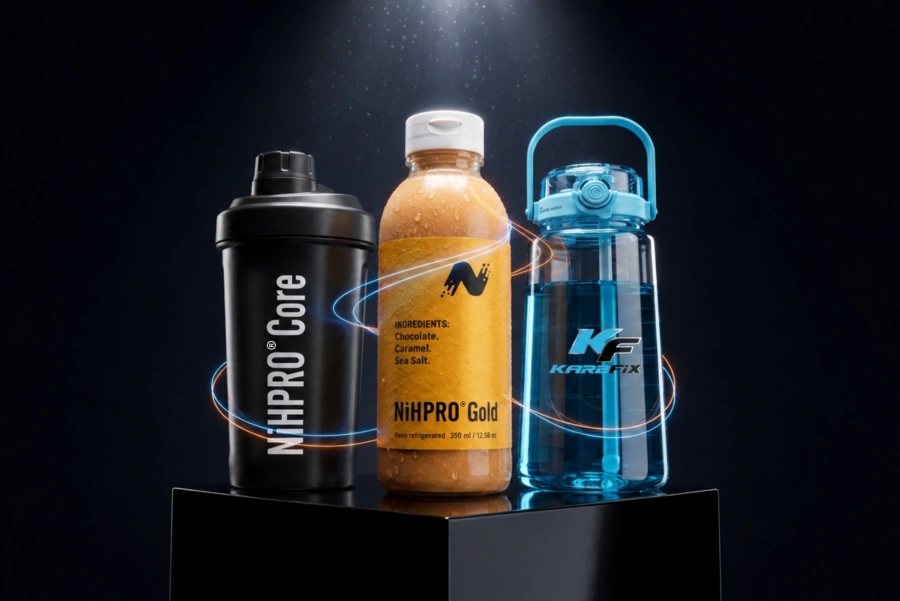
A genuinely useful hybrid range should be modular rather than monolithic. NiHPRO®Core can anchor the daily protein layer through powders and meal replacements. Its approximately 85% protein content, complete essential amino-acid profile, PDCAAS of 1.0, and reported INFOGEST in-vitro DIAAS of 1.16 give it a strong nutritional base, while its mixability and neutral sensory profile support repeated use across an entire training week.
NiHPRO®Gold belongs in the convenience layer. Further hydrolysis and beverage-focused refinement make it suitable for premium RTD and advanced RTM systems where an athlete might need protein immediately after a run, between work and training, or while travelling to an event. Solution stability and drinking quality aren’t cosmetic extras here; they determine whether the recovery option is actually portable in real life. KARBFiX® belongs in the workload layer. The purified, corn-free HBCD system can scale carbohydrate around demanding endurance, interval, or mixed-modality sessions. Its high solubility, clear appearance and mild taste help preserve room for electrolytes and flavour, rather than forcing every hybrid product into an opaque, heavy shake. Together, these three ingredients create genuinely distinct jobs rather than one repetitive “protein plus carbs” message: daily protein coverage, portable recovery, and session-specific fuelling. That lets a brand organise its range around the athlete’s actual week, instead of around outdated sporting tribes.
Design for the Training Week

The hybrid opportunity was never one oversized, all-in-one formula. It’s a coherent architecture: a powder for daily protein, a premium drink for convenient recovery, a clear carbohydrate system for the demanding sessions. Hybrid athletes are reshaping the category simply because their needs expose the limits of the old labels. The next generation of sports nutrition will likely be organised less around tribe, and more around moment, workload and recovery time.
Frequently Asked Questions
Does endurance training always cancel out strength gains?
No. The so-called interference effect is more nuanced than that. Outcomes depend on training status, endurance modality, session order, weekly volume, how close sessions are scheduled to each other, and recovery not a fixed rule that endurance work automatically blocks strength adaptation.
Can nutrition fix a poorly designed concurrent training programme?
No. Nutrition can’t rescue poor programming. What it can do is avoid making an already difficult training conflict worse by going into quality endurance work with low carbohydrate availability, or repeatedly missing protein and energy targets, effectively testing an athlete’s ability to tolerate under-recovery rather than the adaptation the programme was designed for.
Should a hybrid athlete look for one all-in-one supplement?
Not necessarily. A modular range tends to work better than a single product trying to do everything: a daily protein layer, a portable recovery option, and a session-specific carbohydrate system each solve a different problem, rather than one formula compromising on all of them.
What is NiHTEK®'s reported DIAAS score for NiHPRO®Core, and how does it fit a hybrid athlete's needs?
NiHPRO®Core carries a reported DIAAS of 1.16 from an INFOGEST in-vitro assessment, alongside a PDCAAS of 1.0 and a complete essential amino-acid profile. That protein-quality base, combined with its mixability and neutral sensory profile, is designed to support repeated daily use across a demanding training week.
Does the order of training sessions in a day actually matter for a hybrid athlete?
Yes. When endurance and strength sessions are scheduled close together, the first session can affect glycogen status, hydration and neuromuscular fatigue going into the second. Session order should reflect the athlete’s actual priority for that day, rather than being scheduled arbitrarily.