Quick answer: Whey remains a legitimate premium protein, but it’s no longer the only credible one. Rising costs, tighter supply, and demand from GLP-1, active-ageing, women’s health, and allergen-conscious consumers are pushing forward-looking brands to test non-dairy platforms like NiHPRO® and NiHPRO®Gold before a price or supply shock forces a rushed reformulation. The real choice isn’t dairy versus non-dairy; it’s whether a brand explores its options now or waits until it has none left.
I Respect Whey
I’ve used whey for most of my adult life. I’ve sold it, recommended it, and built businesses inside a market where whey earned its place as the recognised premium standard: strong amino-acid quality, real consumer trust, decades of application work behind it. So when I say the future of protein won’t be built on whey alone, I’m not attacking dairy. I’m recognising that the market underneath it has changed.
Premium Became Confused With One Ingredient
For years, plenty of brands used WPI as a shortcut for premium. The logic felt airtight: isolate meant higher protein, lower lactose, a stronger sports-nutrition story. That logic became so familiar that some teams stopped asking whether the ingredient still served every consumer, application, and commercial need in front of them. Whey stopped being one strong option among several. It became the default answer before the question was even fully asked. Defaults are useful right up until the conditions underneath them change.
The Conditions Have Changed
Whey prices and availability have grown harder to plan around. At the same time, high-protein demand is spreading into everyday foods, active ageing, women’s health, weight management, and GLP-1 companion nutrition. Brands increasingly want products that are lactose-free, allergen-conscious, easier on the gut, and able to reach consumers who don’t identify with traditional bodybuilding or vegan categories. One ingredient was never going to carry every one of those briefs at once.
Why Some Brands Stay Fixed on Dairy

The hesitation makes sense.
- Consumers already recognise whey and milk protein.
- Formulators have years of established experience with dairy systems.
- Procurement teams know the suppliers and specifications by heart.
- Marketing teams already understand the language.
- Changing the base ingredient creates real sensory, regulatory and commercial work.
There’s also a quieter fear underneath all of that: that moving away from dairy means accepting the old weaknesses of conventional non-dairy protein. A lot of brand teams still picture something gritty, earthy, or poorly balanced. That perception is exactly why NiHPRO® had to become a third category rather than just another commodity protein.
Why Other Brands Are Moving Now
The more forward-looking brands aren’t waiting for a full-blown crisis. They’re testing alternatives while they still have the freedom to choose. Some are building fully non-dairy premium products from the ground up. Others are using strategic blends to reduce their reliance on WPI or WPC while protecting the taste and texture their consumers already expect. Some are building entirely separate lines for women, active ageing, gut-friendly nutrition, or consumers using GLP-1 therapies under medical guidance. The important part is that they’re learning now, before the next price spike or supply shock forces a rushed reformulation.
Gold Changes the Sensory Conversation
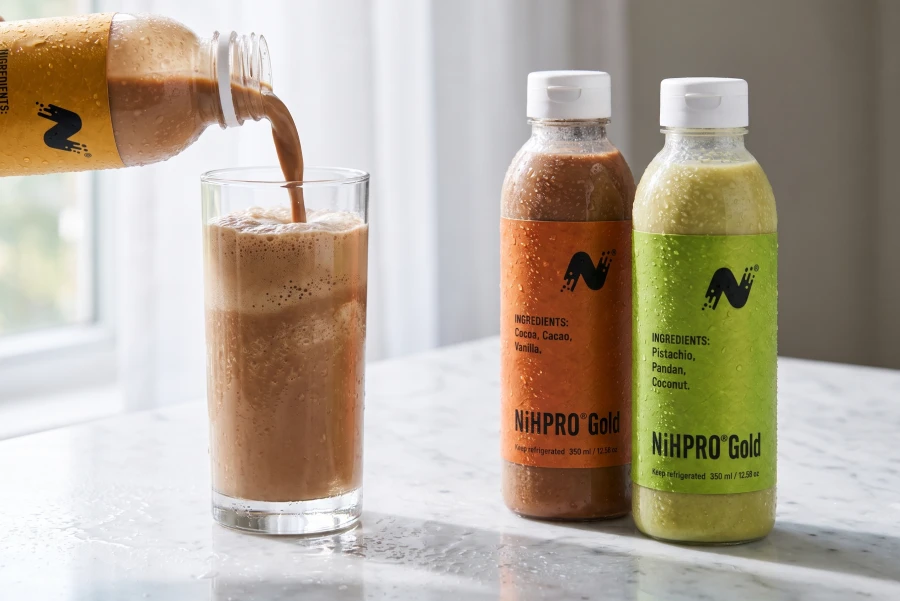
NiHPRO®Core already proved that non-dairy protein could move well past the old category expectations. NiHPRO®Gold is a meaningful step up again for premium RTM and RTD applications. The early response has been strong for a simple reason: Gold doesn’t ask a formulator to imagine what the platform might eventually become. They can taste the difference immediately: smoother mouthfeel, cleaner aroma, stronger flavour carry, a more premium base overall. That doesn’t make it identical to whey. It makes the comparison more useful. A brand can evaluate the complete product experience instead of assuming the source label already decided the outcome.
The Future Isn't Dairy Versus Non-Dairy
The most interesting products still to come will probably combine technologies in ways the old categories never really allowed. A brand might use NiHPRO® as its complete protein platform. It might use NiHPRO®Core inside a dairy blend to improve economics, amino-acid content, allergen positioning, or digestive experience. It might use Gold to build a premium RTD that speaks to dairy and non-dairy consumers at the same time. The right choice depends entirely on the product. The mistake is assuming there’s only one premium route to it.
What Premium Should Mean Now

I think premium protein deserves to be judged against a wider set of questions:
- Does it provide strong, indispensable amino-acid quality?
- Can the consumer actually digest and tolerate the finished product?
- Does it taste and feel premium without excessive repair work?
- Does it reach more consumers, or quietly exclude some of them?
- Can the brand supply it reliably and protect its margin?
- Does it create something distinctive, or just another version of the same formula?
Respect the Category. Don't Get Trapped by It
Whey will stay important. Dairy proteins will keep supporting excellent products. None of this is about erasing that history. It’s about giving brands another credible path. Some companies will wait until cost, availability, or consumer demand forces the decision. Others are already experimenting, learning, and quietly building the next premium standard. I know which group I’d rather build with.
Frequently Asked Questions
Is NiHTEK® saying brands should abandon whey protein?
No. Whey remains a legitimate, well-earned premium standard with real strengths in amino-acid quality and consumer trust. The argument is that whey shouldn’t be the automatic default for every brief; rising costs, supply pressure, and demand from GLP-1, allergen-conscious, and gut-sensitive consumers mean some products are now better served by a platform like NiHPRO®.
Why are more brands exploring non-dairy protein platforms now?
Whey prices and availability have become harder to plan around, and demand is expanding into categories dairy protein doesn’t always serve well, including active ageing, women’s health and GLP-1 companion nutrition. Forward-looking brands are testing alternatives now rather than waiting for a price or supply shock to force a rushed reformulation.
What makes NiHPRO®Gold different from earlier non-dairy proteins?
Can NiHPRO® be blended with dairy protein instead of replacing it?
What questions should a brand ask when evaluating a “premium” protein?
Beyond amino-acid quality, a brand should ask whether consumers can digest and tolerate the finished product, whether it tastes premium without excessive repair, whether it reaches more consumers or excludes some, whether supply is reliable enough to protect margin, and whether it creates something genuinely distinctive rather than another version of an existing formula.