

Yeast protein has been recently presented as an environmentally sustainable and sustainable solution to the nutritional and environmental problems associated with conventional livestock farming. As part of the wider alternatives to food movement, the yeast-derived protein is typically portrayed as being nutritionally complete, eco efficient, and highly technologically flexible. But a closer look reveals numerous structural as well as economic, nutritional and perceptual deficiencies which challenge the notion the claim that yeast proteins is a viable, large-scale alternative to existing protein resources.
Bioavailability and Nutritional Limitations
Although it is true that yeast proteins is frequently called “complete,” this characterization ignores the nutritional deficiencies that are important to know about. The proteins of yeast generally have imbalanced amino acid compositions and have relatively low levels of sulfur-containing acids like methionine and cysteine in comparison to animal proteins. These deficiencies can be particularly troublesome for people who are heavily dependent on one protein source, since inadequate sulfur amino acid intake could hinder the production of protein as well as metabolic functions.
More critically, the protein digestibility and bioavailability of yeast protein remain inferior to those of animal-derived proteins. Typical PDCAAS (Protein Digestibility Corrected Amino Acid Score) and more advanced and accurate DIAAS (Digestible Indispensable Amino Acid Score) ranges for yeast protein are up to approximately 0.90 and 0.75–0.90, respectively.
Nucleic acids that are abundant in yeast biomass could cause excessive uric acid creation when consumed in huge amounts which can pose risks to kidney health and gout. While nucleic acid reduction methods exist, they increase complexity costs, as well as processing time, which can undermine claims of efficacy.
Furthermore, the yeast cell walls contain beta-glucans as well as mannans, which can be promoted as having immunity, can hinder digestion and cause discomfort for those who are sensitive. These issues limit yeast protein’s potential as a main dietary protein, rather than as a supplement ingredient.
Processing Intensity

The production of yeast protein is largely dependent on industry-scale fermentation and downstream purification and intensive processing. In contrast to whole food proteins, yeast protein has to undergo cell destruction, nucleic acid removal in addition to flavor masking and texturization prior to being safe for consumption by humans. This level of processing puts the yeast protein right in that category known as “ultra-processed food products,” which have been increasing linked to adverse health effects, such as cardiovascular diseases and metabolic disorders.
The requirement for intensive processing also requires more energy in addition to introducing chemical components, such as solvents, acids or enzymatic treatment. In the end, the claimed environmental and health benefits of yeast protein aren’t so clear when the all assessment of lifecycles and the health impacts studies are taken into consideration.
Environmental Trade-Offs
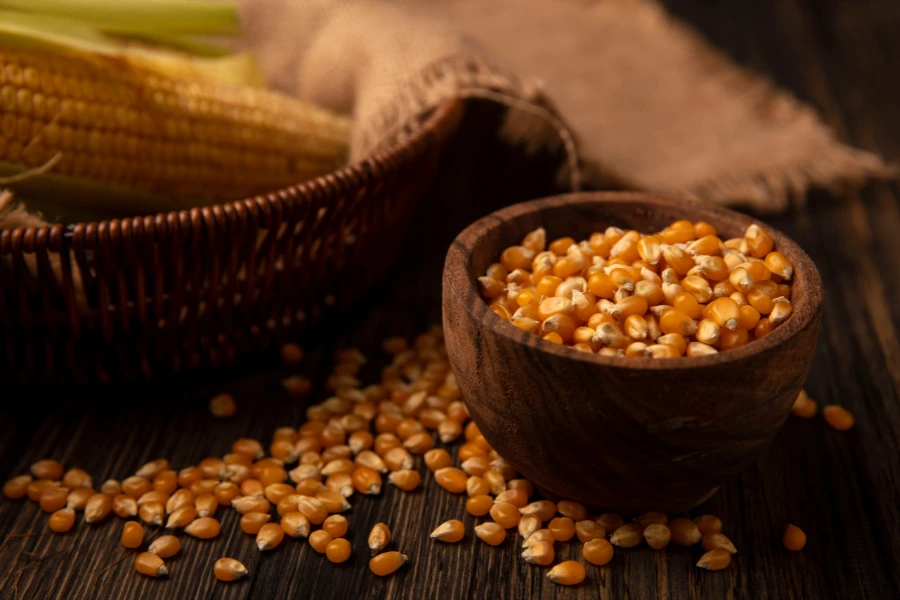
Many advocates declare they believe that it is because yeast has a smaller ecological footprint than livestock agriculture. But, these claims typically rely on idealized system boundaries that do not include downstream and upstream inputs. The process of fermentation needs refined carbohydrates as feedstocks that are typically produced from sugarcane, corn or wheat, which are also associated with fertiliser application, land use as well as greenhouse emissions of greenhouse gases.
Additionally, large-scale fermentation facilities require continuous energy inputs, typically sourced from fossil fuels, to perform Aeration and sterilization, temperature control and drying. If these elements are properly considered and accounted for, your carbon footprint from yeast proteins could exceed or even match the footprint of certain plant-based proteins. Contrary to ruminant systems that are that are integrated into models of regenerative agriculture The production of yeast proteins is totally disconnected from ecosystems and does not contribute to the health of soils or biodiversity.
Scalability and Economic Viability

Despite claims of its scalability it is known that yeast remains in a position of being economically incomparable to the commodity livestock proteins as well as established plant proteins like pea and soy. The capital costs for the fermentation infrastructure are huge, while operational costs are subject to fuel prices, availability of feedstock and the risk of contamination.
Additionally, the fermentation process does take a long time to grow linearly. With increasing production and the pressures related to the transfer of oxygen as well as heat dissipation and the stability of the microbial population increase, leading to lower yields. These limitations undermine the notion that yeast proteins can quickly and inexpensively replace traditional protein sources on an international scale.
Functional and Sensory Limitations

From a consumer’s perspective, yeast protein has to contend with constant sensory issues. Even with sophisticated processing, yeast-derived proteins may be bitter, metallic or umami-rich off-flavors which limit their use in foods with neutral taste. The masking of these flavors usually requires more ingredients, such as salt or fats or flavoring agents, further enhancing the complexity of formulations and reducing the transparency of nutrition.
Consumer Perception and Acceptance Obstacles
The trust of consumers is among the biggest challenges for that yeast acceptance. Studies consistently show that consumers are skeptical of microbial and biotechnology-derived foods, perceiving them as artificial or unnatural. In contrast to the traditional fermented food items which contain yeast serves as a background ingredient, yeast protein demands that consumers accept microorganisms as a primary source of nutrition. This is a mental decision that many are reluctant to take.
This is further skepticism becomes evident by the fact that yeast proteins is produced with genetically modified strains, despite the fact that the product is not made up of valid GM organisms. The approval of the regulatory authorities does not always translate into acceptance by the public especially in areas with high cultural values for the consumption of minimally processed food products.
Regulatory and Health Uncertainty

While some yeast-derived components have received regulatory approval however the long-term health effects of excessive of yeast consumption have not been adequately studied. The majority of safety information is dependent on moderate or short-term consumption scenarios, not on chronic reliance on the protein as the primary source. This uncertainty could pose a risk to public health policies and erodes the confidence of that yeast is a protein as a primary food ingredient.
There was a controversy over the Benikoji (red yeast rice) incident came under close investigation in 2024 when products that contained the ingredient were associated with grave health issues in Japan. Further investigations revealed that some benikoji batches had been contaminated during fermentation by molds that were not intended that led to the development harmful secondary metabolites that are harmful, most especially puberulic acid that has been linked to chronic kidney disease. The recalls that resulted highlighted the vulnerability of fermentation-derived ingredients to contamination if strain control, monitoring of processes, and downstream testing are not adequate which raises questions regarding quality security and management of risk for food ingredients derived from yeast and microbial sources.
Conclusion
Although yeast protein is often advertised as a sustainable, nutritional, and easily scalable alternative to animal protein, a careful review reveals a number of weaknesses. Inconsistencies in nutrition, digestion issues as well as the high processing demands as well as questionable environmental benefits as well as high production costs along with sensory challenges and low acceptance by consumers all limit its use as a common protein solution.
Instead of being a substitute for traditional proteins the yeast protein is best recognized as a specialty ingredient that has specific functional or additional applications. It is important to not overstate the potential for it to divert focus and attention away from better sustainable, ecologically connected, and widely accepted strategies for diversification of proteins.
References
- FAO/WHO, Protein Quality Evaluation, FAO Food and Nutrition Paper 51. Rome, Italy: Food and Agriculture Organization of the United Nations, 1991.
- X. Cao, H. Liu, M. Yang, K. Mao, X. Wang, Z. Chen, M. Ran, and L. Hao, “Evaluation of the nutritional quality of yeast protein in comparison to animal and plant proteins using growing rats and INFOGEST model,” Food Chemistry, vol. 463, Art. no. 141178, 2025.
- C. I. Waslien, H. E. Calloway, and D. H. Margen, “Uric acid levels in men fed single-cell protein diets,” American Journal of Clinical Nutrition, vol. 21, no. 8, pp. 892-897, 1968.
- B. A. Stone, “Polysaccharides in yeast cell walls and their role in digestibility,” Advances in Microbial Physiology, vol. 52, pp. 123-156, 2009.
- A. Ritala, H. Häkkinen, T. Toivari, and M. Wiebe, “Single cell protein State-of-the-art, industrial landscape and patents 2001-2016,” Trends in Food Science & Technology, vol. 78, pp. 186-197, 2017.
- C. A. Monteiro, G. Cannon, J.-C. Moubarac, R. Levy, M. Louzada, and P. Jaime, “The UN Decade of Nutrition, the NOVA food classification and the trouble with ultra-processing,” BMJ, vol. 365, p. l228, 2019.
- T. Searchinger et al., Creating a Sustainable Food Future: A Menu of Solutions to Feed Nearly 10 Billion People by 2050. Washington, DC, USA: World Resources Institute, 2019.
- S. Smetana, M. Mathys, A. Knoch, and V. Heinz, “Meat alternatives: Life cycle assessment of most known meat substitutes,” Journal of Cleaner Production, vol. 137, pp. 579-588, 2021.
- P. Carbonell et al., “The economics of microbial protein production,” Trends in Biotechnology, vol. 39, no. 9, pp. 889–901, 2021.
- P. M. Doran, Bioprocess Engineering Principles, 2nd ed. Oxford, U.K.: Academic Press, 2013.
- K. Kyriakopoulou, A. Keppler, and A. van der Goot, “Functional and sensory properties of yeast protein ingredients,” Food & Function, vol. 12, no. 7, pp. 2802-2815, 2021.
- M. Siegrist and C. Hartmann, “Perceived naturalness, disgust, trust and food neophobia as predictors of cultured meat acceptance,” Food Quality and Preference, vol. 86, p. 104063, 2020.
- L. J. Frewer, I. A. van der Lans, A. R. Fischer, M. J. Reinders, D. Menozzi, and K. Zhang, “Public perceptions of agri-food applications of genetic modification,” Trends in Food Science & Technology, vol. 30, no. 2, pp. 142-152, 2013.
- European Food Safety Authority (EFSA) Panel on Nutrition, Novel Foods and Food Allergens, “Safety assessment of novel protein sources,” EFSA Journal, vol. 20, no. 9, p. e07428, 2022.
- Ministry of Health, Labour and Welfare (MHLW), Japan, “Health hazard investigation and recall related to red yeast rice (benikoji) products,” Mar. 2024.
- N. Normile, “Contaminated red yeast rice supplements linked to kidney damage in Japan,” Science, vol. 383, no. 6686, pp. 116-117, Mar. 2024.
- K. Watanabe et al., “Puberulic acid toxicity and renal effects associated with fungal contamination,” Journal of Toxicological Sciences, vol. 49, no. 2, pp. 65-74, 2024.
- NHK World Japan, “Japan recalls red yeast rice products after deaths and hospitalizations,” Mar. 2024.