I don’t speak about gut health since it’s trending.
I discuss it because I am aware of the feeling you get when your gut isn’t functioning well as well as how many years of life will take.
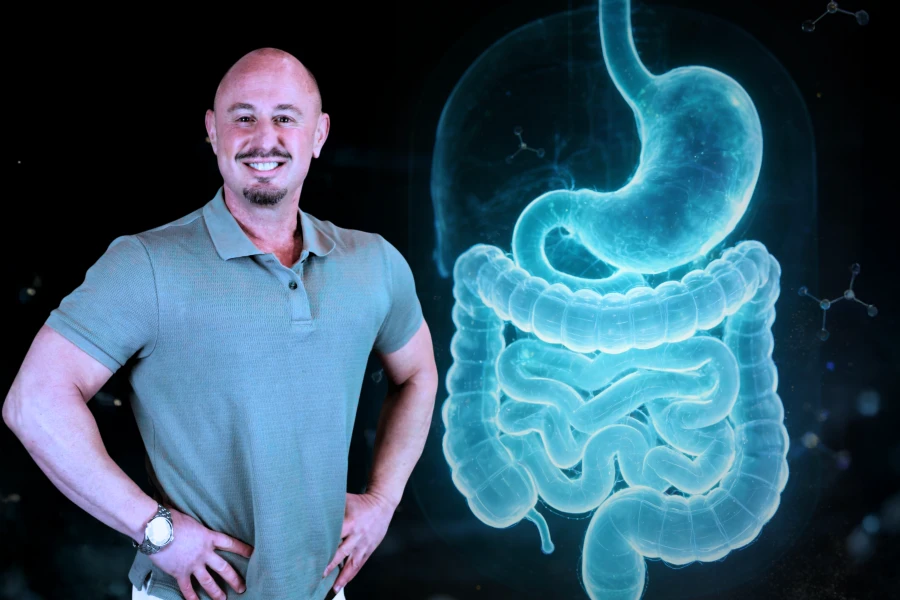
About 10 years ago I was through a major health issue that forced me into an intense focus on gut health and repair. This experience has shaped the way I live my life, what I eat and what I consider protein.
It’s also one of the main reasons why NiHTEK® began investigating NiHPRO® years ago: to develop an experience with protein that works and is comfortable inside the intestine.
After you’ve had issues with your gut You don’t pick a the protein based solely on hype.You select it based on the way it tastes, performs, and where it is absorbed by your digestive tract.
After more than 30 years of nutrition for athletes, just a handful of things really matter.
I’ve worked for 30 years in the field of nutrition for athletes and have been using protein in my own life for more than 40 years. In spite of all the advertising the same principles will always prevail:
1) Taste + mixability
If a protein smells bad and is not well mixed people won’t stick with it. Simple.
2.) Quality of protein (EAAs and scoring which actually mean something)
Protein quality isn’t a vibe it’s measurable. Two widely used systems are PDCAAS and the newer DIAAS, which the FAO has recommended as a more advanced way to evaluate protein quality because it focuses on digestible indispensable amino acids.
3) Digestibility
“High Protein” on labels isn’t a thing when your body isn’t able to take it in or produces a stomach blowback.
That’s the foundation for what I think is what a gut-friendly protein should deliver.
The truth is: "dairy-free" has historically been a sign of compromise

Since the beginning, a lot of dairy-free proteins were created from commodities and, in actual life, the majority of people aren’t thrilled with the taste.
They may be sour or earthy, they can be difficult to mix, and even harder to drink, and the final result is usually an unsatisfactory mix.
When the protein of choice doesn’t meet the expectations of flavor and texture, companies begin looking for ways to cut corners.
I can understand the reason. But here’s the danger:
If you just solve the issue of the taste problem, but you compromise everything else and you’re not innovating, you’ve created a fake.
Because the concept of a “great-tasting protein” that omits the quality of protein, amino acids, an allergen strategy or even digestive consistency, isn’t a solution that’s palatable for the gut on a large scale.
"Gut-friendly for all" must contain allergen-related real
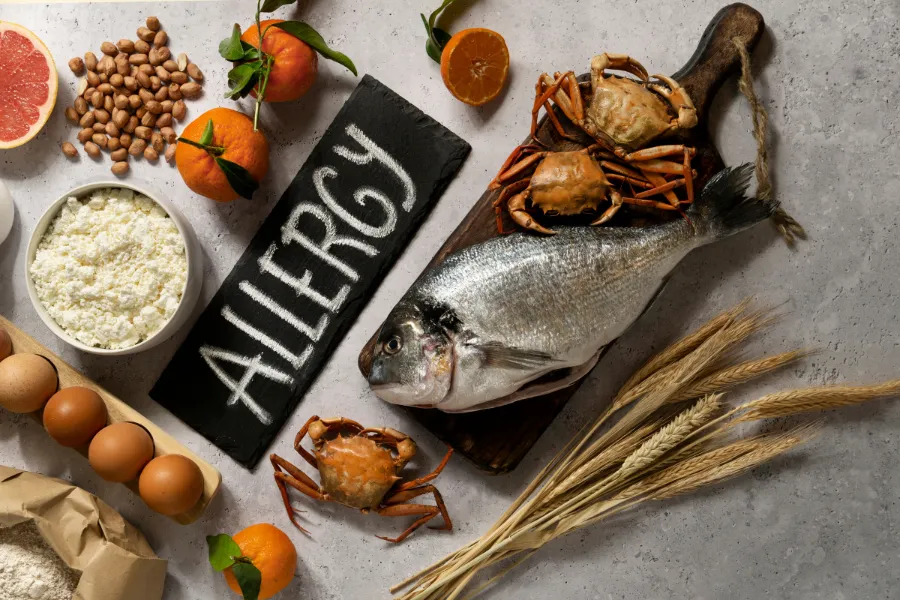
We’ll be honest: peanuts are an allergen that is a big problem. Therefore, when a product advertises “gut-friendly for all” and contains some of the more commonly recognized allergens, the claim isn’t as real-world.
Allergen risk is a concern and is especially important at large.
Protein quality doesn't mean "plant or animal" It's digestible EAA delivery
This is the point where the conversation must grow.
The quality of protein is determined by the way a protein can deliver essential amino acids that are digestible, not just the market segment it is placed in.
This is also the reason DIAAS has been receiving more focus in serious formulation discussions and also the reason that the FAO has endorsed it as the most sophisticated framework.
Peanut protein and “gut-friendly” marketing: the contradiction
Let’s be very clear on one point:
Peanuts are a major allergen
In the United States, peanuts are listed among the major food allergens and are commonly referred to within the “Big 9” allergen set used in food labeling and consumer safety education.
In the EU, peanuts are also included in the 14 allergens that require clear labeling for consumers.
So if a brand is claiming “gut-friendly for everyone,” while using one of the most recognized allergenic ingredients on earth that’s not aligned.
Allergen risk matters. Especially at scale.
Peanut protein vs whey: protein quality and amino acid score matters

This is where the conversation needs to mature.
Protein quality isn’t just “plant vs animal.”
It’s about how well a protein delivers digestible essential amino acids.
Published research reviews have estimated peanuts PDCAAS ≈ 0.70.
And in the Rutherfurd et al. dataset comparing protein sources, roasted peanuts were reported at DIAAS = 0.434 and PDCAAS = 0.509.
For context, that same dataset reports whey protein isolate at DIAAS ≈ 1.09.
What does this mean in plain English?
Even if peanut protein is used to improve taste, it typically does not deliver the same high-performance essential amino acid outcome per gram as whey.
And yes values vary by format (whole peanut vs flour vs isolate) and processing. But the core limitation remains: protein quality and digestible EAA delivery are often weaker compared to premium dairy proteins.
Leucine The "MPS trigger" the majority of brands do not explain
Leucine is important because it’s an essential amino acid that is involved in promoting muscle protein synthesis (MPS). For the average consumer (especially those who train intensely, ageing, dieting or attempting to maintain lean mass discussion about leucine is usually the distinction between “I consumed proteins” as opposed to “my body actually utilized it effectively.”
When brands select the protein option and choose a protein system, they must think about the benefits it offers per serving rather than what they think is good on labels.
What inspired us to create NiHPRO®
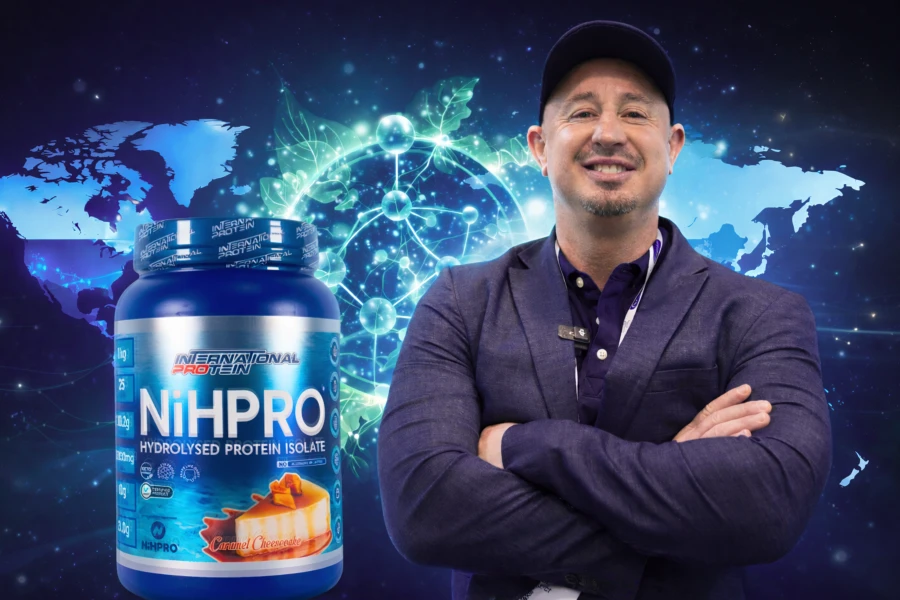
We are at NiHTEK®, we don’t care about shortcuts.
We’re here to develop what the market ought to have seen in the past and that is A gut-friendly protein product that does not entice users into the old tradeoff of:
“Tastes good” in contrast to “Performs well” against “Feels great in your stomach.”
This is the problem that NiHPRO® was created to address. It’s an engineered protein brand that is branded by NiHTEK®‘s Advanced Precision Hydrolysis™ (APH™) along with the Molecular Protein Infusion™ (MPi™) technology platform.
NiHTEK® places NiHPRO® as a protein platform engineered to provide superior sensory performance, digestive-first advantages and quantifiable quality of protein (including reference to DIAAS and PDCAAS in NiHTEK®‘s formulations).
Most importantly, NiHTEK®has been marketed as a B2B product. We don’t sell directly to consumers, but we develop the ingredient technology so that top brands can create the final products.
Originated from Nature. Then perfected by science. Motivated by Innovation.
Final word
If you’re a brand’s owner and reading this article Don’t let “gut healthy protein” be an unpopular buzzword.
Make it into:
- Ingredient selection
- Protein quality standards for protein quality (DIAAS/PDCAAS thinking)
- Allergen risk strategy
- The actual experience of a consumer (taste mixing, taste)
Because once you’ve experienced digestive issues your own… you’re done being a victim of marketing and begin seeking out real food.
This is precisely why we created NiHPRO®.
– Drew Campbell, CISSN
Founder & Chairman, NiHTEK®