Replacing Whey With Milk Protein: Is It Worth It?
Why Brands Are Looking for an Exit From Whey
The pressure in the whey market is real. High-protein demand has grown faster than the available supply of premium whey ingredients, and the structure of dairy production means supply cannot respond overnight. Whey is connected to milk processing, cheese production, filtration capacity and drying capacity. A brand cannot simply ask the market to produce more WPI next month.
When costs move sharply, procurement teams look for alternatives, that is their job. In many cases, milk protein concentrate or milk protein isolate can appear to offer a lower-cost dairy route while retaining a familiar milk-derived story.
That logic is understandable. The concern is what happens next:
Some brands may think they are escaping the fire by moving from expensive whey into cheaper milk proteins. They may simply be jumping from the frying pan straight back into the fire.
Milk Proteins Are Not Automatically Inferior
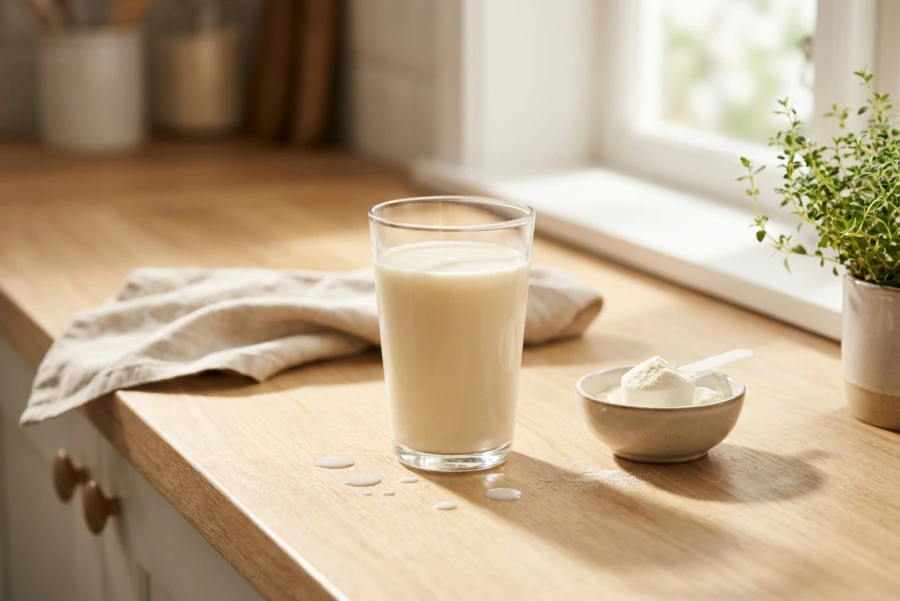
It’s important to be fair here. MPC and MPI can be genuinely useful ingredients. Their casein-to-whey balance, texture and heat behaviour can suit certain foods and low-acid beverages. A responsible discussion should not describe every milk protein as poor quality.
The issue is strategic, not qualitative. If the only reason for the reformulation is this quarter’s raw-material cost, the brand may be spending a large amount of money without creating a stronger product or a more resilient supply position.
The Hidden Cost of Reformulation
A formulation change can trigger work far beyond the purchase price of the new protein:
- Bench formulation and flavour redevelopment
- Changes in texture, sweetness, viscosity and mixability
- Heat, stability and shelf-life validation
- New nutrition calculations and regulatory review
- Packaging, labels, barcodes and artwork changes
- Write-off or management of old inventory
- Customer-service communication and potential consumer confusion
- Time lost while competitors make the same move
A saving of a few dollars per kilogram can disappear quickly if the finished product needs substantial repair, or if the brand has to repeat the exercise when the new input also tightens.
What Happens When the Whole Market Moves at Once

Commodity markets respond to demand. If many brands move from WPC or WPI into the same MPC or MPI grades, the lower-cost option attracts more buying pressure. That doesn’t guarantee an identical price spike, but it weakens the assumption that today’s substitute will remain cheap and freely available.
The recent whey shortage has already encouraged manufacturers to consider milk-protein alternatives. This is rational behaviour at an individual-company level. Across the market, however, it can concentrate demand in the next available category.
The larger question is whether the reformulation reduces dependence, or simply changes which dairy input the brand depends on.
The Premium Positioning Risk
Many products have spent years teaching consumers that whey isolate is the premium standard. Quietly replacing a meaningful portion with a cheaper milk protein may protect margin, but it can also create a positioning problem.
The product may become thicker, slower digesting, or different in taste and texture. None of those changes is automatically bad, they become a problem when the label, brand story and consumer expectation still imply that nothing important has changed.
Three Questions Every Brand Should Ask Before Reformulating
- Did the reformulation improve the consumer’s product?
- Did it make the supply chain more resilient?
- Did it make the brand more distinctive, or more similar to everyone else making the same move?
Why NiHPRO® Offers a Different Path

NiHPRO® was not created simply as the next low-cost substitute for whey. If that were the goal, it would have been built as another commodity joining the same price race.
Instead, NiHPRO® is a branded protein platform with a different value structure: non-dairy, free from 24 major allergens, lactose-free, amino-acid optimised, hydrolysed, and developed around sensory and digestive comfort.
- NiHPRO®Core provides a scalable foundation for everyday formulations.
- NiHPRO®Gold gives brands a more premium RTM and RTD option.
The platform can be used as the lead protein in a new product or, in selected formulas, blended with dairy to reduce dependence without abruptly abandoning a familiar consumer experience.
The point is not to tell every brand to remove dairy, whey remains a strong ingredient. The point is to stop treating a temporary commodity switch as though it were a long-term innovation strategy.
Building a Five-Year Protein Strategy, Not a Quarterly Fix
The best reformulation decisions weigh raw-material cost, nutritional quality, sensory performance, manufacturing, claims, differentiation and supply security together.
Sometimes the correct answer will be MPC or MPI. Sometimes it will be a blend. Sometimes it will be a new platform such as NiHPRO®. The decision should come from the product the brand wants to become, not only the problem it wants to escape.
A cheaper formula is not automatically a better strategy. Before changing the label, a brand should be certain it is moving forward, rather than buying a short pause before the next reformulation.
Frequently Asked Questions
Is milk protein concentrate (MPC) a good substitute for whey protein?
MPC and MPI can work well in certain foods and low-acid beverages thanks to their casein-to-whey balance and heat stability. Whether they’re a good substitute depends on the product’s sensory goals and positioning, not just on ingredient cost.
Why are protein brands reformulating away from whey right now?
High-protein demand has outpaced the supply of premium whey ingredients, and dairy supply, tied to milk processing, filtration and drying capacity, can’t expand quickly, pushing procurement teams toward lower-cost milk protein alternatives.
Does switching from whey to MPC or MPI always lower total costs?
Not necessarily. Reformulation can trigger costs in bench development, stability testing, regulatory review, packaging changes, and inventory write-offs that can outweigh the raw-material savings.
What is NiHPRO®?
NiHPRO® is a non-dairy, allergen-free protein platform, free from 24 major allergens and lactose-free, offered in two lines: NiHPRO®Core for scalable everyday use and NiHPRO®Gold for premium RTM/RTD formulations.
Can NiHPRO® be blended with dairy protein instead of fully replacing it?
Yes. In selected formulas, NiHPRO® can be blended with dairy protein to reduce dependence on a single commodity input without abruptly changing the consumer experience.