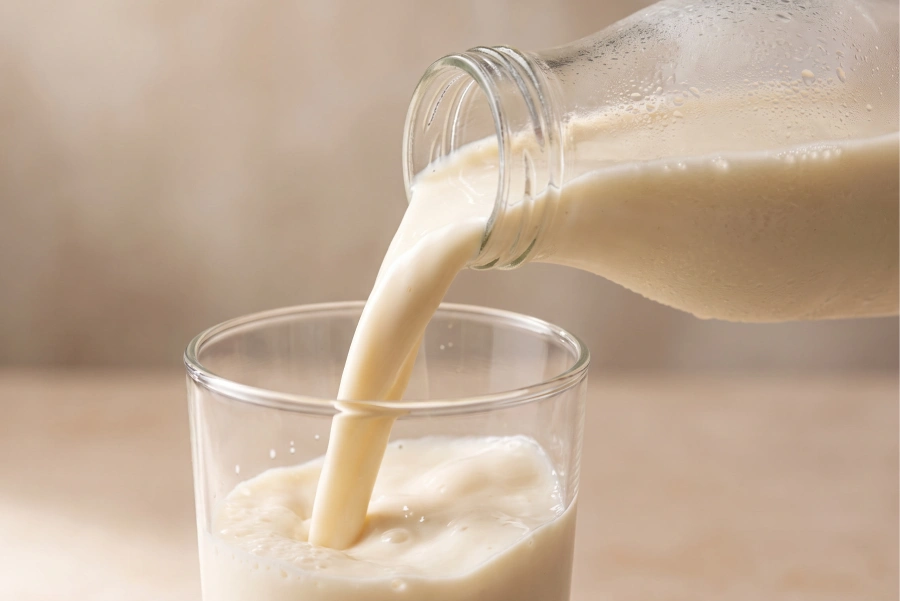
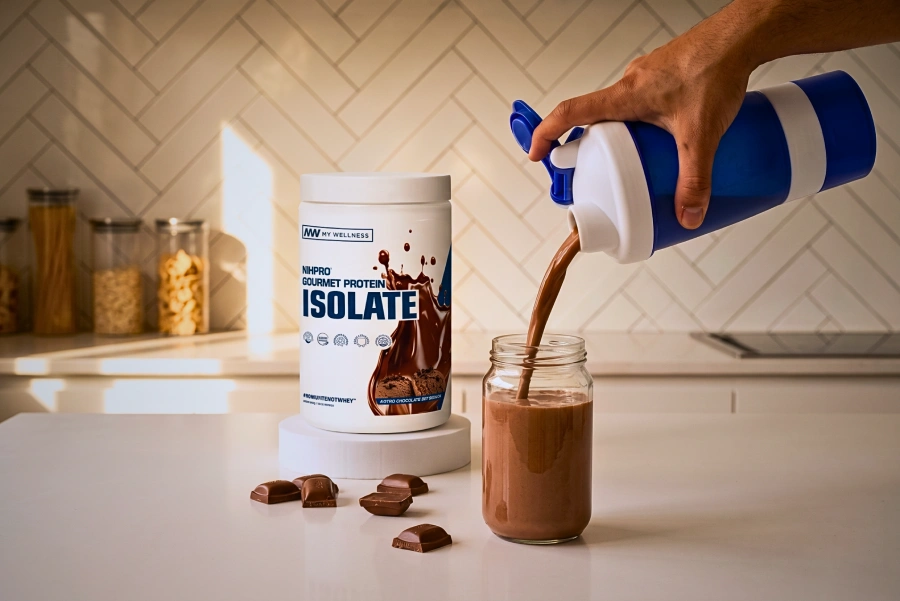
Consumers want smaller, easier formats, but they still expect meaningful nutrition. That makes every gram in the formula work harder.
The Product Is Getting Smaller, but Expectations Are Not
One of the most interesting shifts in nutrition is the move toward compact formats. Consumers want stick packs, mini shakes, smaller bars, protein coffees, portion-controlled snacks, and easy products they can carry through a busy day. At the same time, they expect those products to deliver real nutritional value. That creates a challenge. If the serving size gets smaller, every ingredient has to work harder. The product needs enough protein to matter, enough sensory quality to be enjoyable, and enough simplicity to feel modern. There is less room for mistakes.
This is why “value per serving” is becoming more important than “size of serving.” The GLP-1 era has accelerated this shift significantly. As appetite-suppressing medications change how many consumers eat, smaller, more nutritionally dense servings that are easy on the stomach have become a priority not just for convenience, but for genuine clinical and wellness reasons. Consumers eating fewer calories still need to preserve lean mass, which means the protein they do consume has to count more. As detailed in our blog on Leucine Reimagined: How NiHPRO® Powers MPS Without Dairy, when appetite is lower, and servings are smaller, leucine density and protein quality become more important than ever, because every serving needs to do more of the physiological work.
Protein Density Must Still Respect the User Experience

Adding protein is not difficult. Adding protein while keeping the product smooth, drinkable, and easy to understand is the real challenge. Protein can make a compact product too thick, too dry, too bitter, or too filling in the wrong way. The science supports the importance of adequate high-quality protein for active individuals. The ISSN position stand notes that athletes and exercising individuals may benefit from protein supplementation when it helps them meet protein quality and quantity targets (Jager et al., 2017). However, science does not remove the need for usability. A consumer must be able to take the product in the situations where it is intended to work.
A compact morning drink has different needs from a post-training shake. A small snack has different needs from a full meal replacement. The protein base has to support the format, not dominate it. This is where digestive quality becomes directly linked to serving size strategy. A protein that is pre-digested through advanced hydrolysis absorbs more quickly and sits more lightly, which matters significantly in compact or low-volume formats where the consumer needs rapid, comfortable nutrition without heaviness. Proteins that cause bloating, discomfort, or residual heaviness are far less suited to the compact nutrition moment than proteins engineered for clean, rapid absorption. For a detailed look at how digestive quality shapes daily usability, see our blog on NiHPRO®Bev: The World’s First Hydrolysed, Allergen-Free, FODMAP-Free Protein for Functional and Medical Beverages.
Why NiHPRO®Gold and NiHPRO®Core Fit Compact Nutrition Thinking
NiHPRO®Gold and NiHPRO®Core help brands think beyond the old idea that high-protein products must be large, heavy, and obviously supplement-like. NiHPRO® is a third category of protein: both dairy and vegan-friendly, non-dairy, and developed to support strong amino acid design with a better sensory experience. For compact formats, this matters. A protein ingredient with a cleaner profile gives developers more freedom to balance sweetness, flavor, and mouthfeel. It also helps brands create products that feel easier to consume in routine moments: breakfast, commuting, between meetings, after training, or while traveling.
NiHPRO®Gold is especially relevant for premium beverage and smooth-format concepts. NiHPRO®Core offers a strong platform for powders and broader high-protein applications where nutrition density and everyday usability must meet. The independent DIAAS score of 1.16 that NiHPRO® carries is not just a nutritional credential. It is a formulation advantage. Because NiHPRO® delivers more usable amino acids per gram than most conventional non-dairy proteins, brands can achieve meaningful protein quality at inclusion levels that do not overburden the serving size with excess bulk. This is what “value per serving” looks like in practice: more nutrition delivered more efficiently, in a format that still feels light and enjoyable. For the full scientific validation behind NiHPRO®‘s quality benchmark, see Forged by Nature, Backed by Science: NiHPRO® Sets a New Standard in Protein Quality.
Compact Snack Formats: Where Texture and Density Intersect
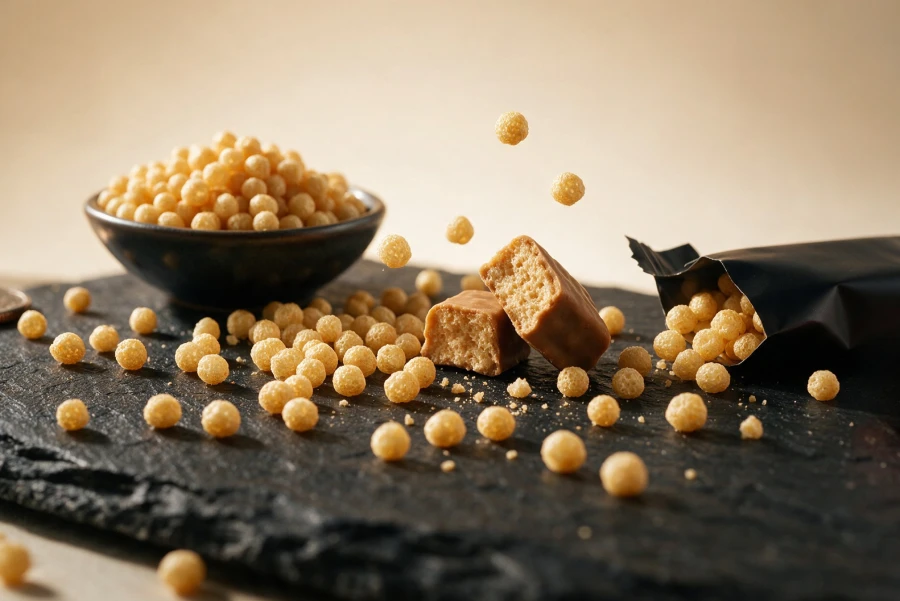
The serving size challenge is particularly visible in the snack category. Brands developing high-protein snack bites, mini bars, portion-controlled crisps, and breakfast formats are navigating the same tension: meaningful protein in a small physical format without creating the dense, heavy eating experience that drives consumer abandonment. NiHPRO®Puffs addresses this challenge specifically in extruded snack applications. With 80% protein purity and less than 3% carbohydrates, it delivers a high protein density per gram of ingredient while maintaining a light, crispy texture and clean flavor profile that scales well into small-format snack products. Brands developing compact protein bites, portion packs, or high-protein cereals can achieve strong nutritional credentials without the heavy, filling mouthfeel that typically comes with high-inclusion protein formats. For full technical details on NiHPRO®Puffs and its applications, see the NiHPRO®Puffs ingredient page.
The demand for this type of format is structural, not cyclical. As covered in our blog on HFSS Snack Rules: Why Protein Texture Must Do More, tightening snack marketing regulations in key markets are pushing brands to build products that deliver on nutrition and texture simultaneously from day one. In a smaller format, there is even less room for compromise.
The Opportunity Is Not Simply "Small." It Is Smarter.
The compact nutrition trend should not be reduced to smaller packaging. The real opportunity is smarter product architecture. A smaller product should feel intentional. It should deliver meaningful nutrition without making the consumer feel overloaded. Industry trend coverage in 2026 points toward high-protein snacks, convenient protein formats, and products designed to fit existing daily habits rather than create new ones (Lactalis Ingredients, 2026; NielsenIQ, 2026). That is exactly where advanced protein ingredients can help. When the base ingredient is clean, efficient, and easy on the digestive system, a compact product can deliver a complete nutritional moment without asking the consumer to make a sacrifice in either size or experience.
For brands thinking through long-term ingredient strategy in this space, pricing stability also matters. A compact product that delivers premium nutrition value needs to be commercially viable over time, and that requires an ingredient partner whose pricing does not fluctuate with commodity cycles. For more on why pricing predictability has become a strategic advantage, see our blog on Stable Pricing Is Becoming a Premium Feature in Branded Ingredients. The next high-protein product may not be larger or louder. It may be lighter, more precise, and easier to say yes to every day. For brands ready to build compact, high-value nutrition products around the right foundational ingredients, explore the full NiHTEK® platform at the Ingredients page or contact the NiHTEK® team to request samples and begin the formulation conversation.
References
- Jager R, et al. International Society of Sports Nutrition Position Stand: protein and exercise. Journal of the International Society of Sports Nutrition. 2017. https://link.springer.com/article/10.1186/s12970-017-0177-8
- FAO. Dietary protein quality evaluation in human nutrition. FAO Food and Nutrition Paper 92. 2013. https://openknowledge.fao.org/items/53cf3d0a-1db2-4667-823a-e9d73278efe9
- NielsenIQ. Expo West 2026: A New Era of Functional, Clean, and Metabolic Nutrition. 2026. https://nielseniq.com/global/en/insights/analysis/2026/expo-west-2026-trends/
- Lactalis Ingredients. Food trends and ingredients that will shape 2026. 2026. https://www.lactalisingredients.com/news/blog/food-trends-and-ingredients-that-will-shape-2026/