
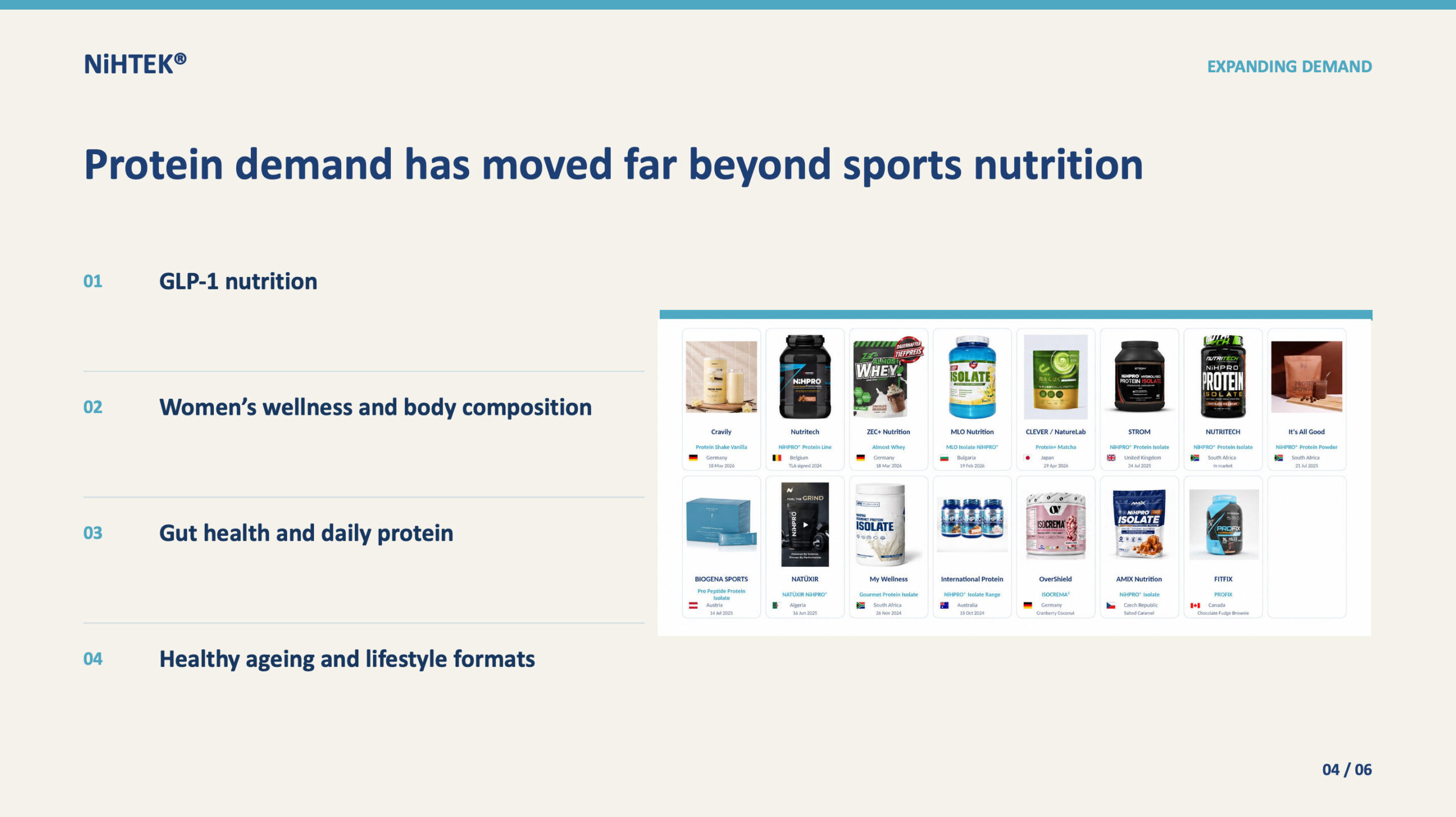
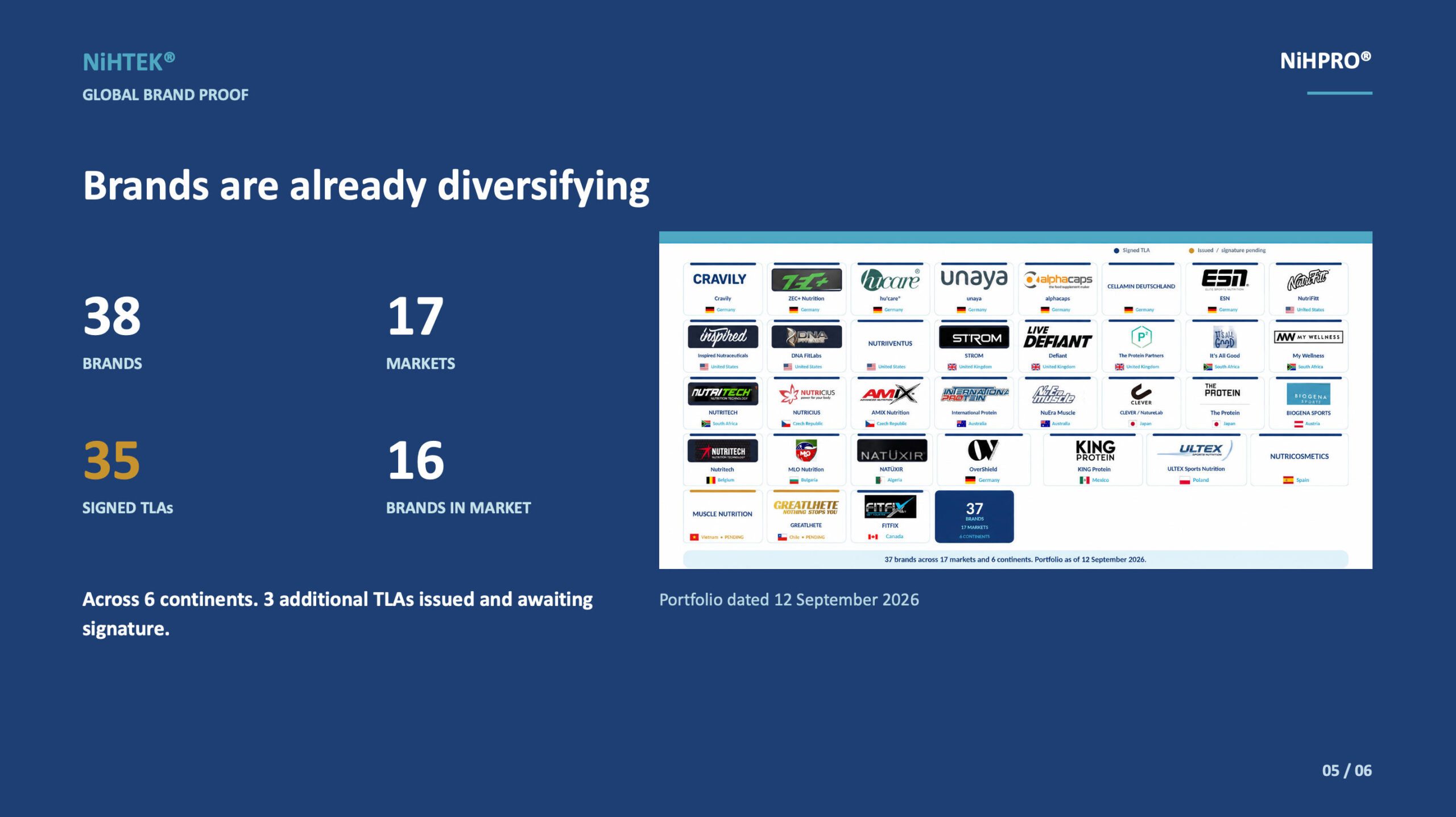
Quick answer: NiHPRO® is now selling, launching, or moving through active commercial development across Japan, Australia, South Africa, Algeria and North Africa, the United Kingdom, continental Europe, and Chile. Each market has pressure-tested the platform in a different way: Japan on sensory precision, Australia on competitive credibility, South Africa on repeat commercial demand, Europe and the UK on formulation and allergen pressure, North Africa on market-entry fundamentals, and Latin America on cross-portfolio fit with KARBFiX®. Status differs by country and should always be confirmed against current commercial records. The pattern across all of them is the same: a genuinely global ingredient succeeds by adapting locally, not by staying identical everywhere.
A Powder Only Becomes Real Once It Leaves the Lab
An ingredient can perform beautifully in a single laboratory and still stumble the moment it meets a different manufacturer, a different flavour system, or a different consumer palate. That gap between promising in theory and proven in practice is why I pay closer attention to NiHPRO’s global footprint than to almost any other metric we track. A map covered in dots doesn’t tell you much on its own. What tells you something is watching the same ingredient get pulled apart, questioned and reformulated by people who owe you nothing, and who have every reason to reach for the familiar option instead. Our recent look at how NiHPRO® is scaling into a genuinely worldwide protein category covered the broad strokes of that expansion. This piece is about what each individual market taught us along the way.
Japan Taught Us Precision
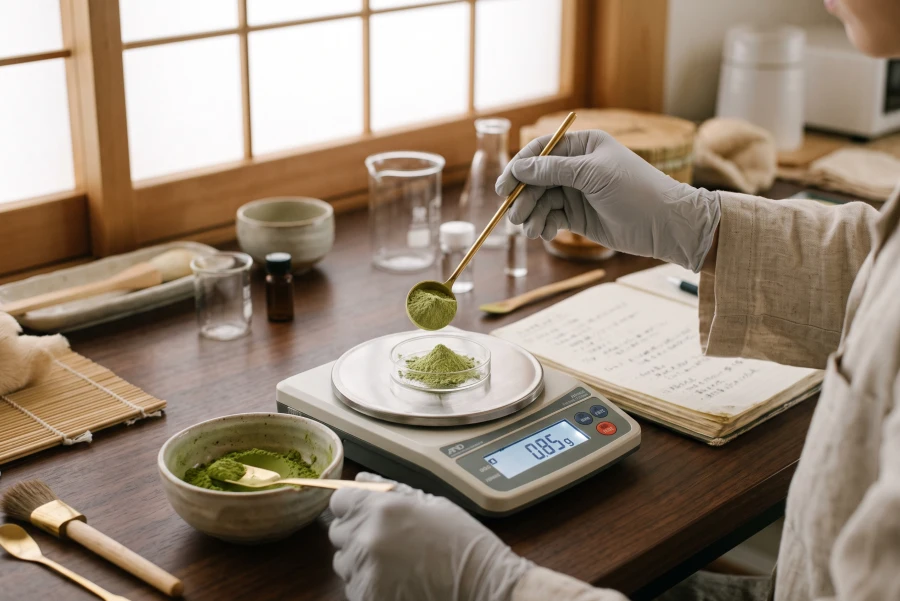
Japan has shaped this story more than any other market. Japanese consumers and formulators notice things other markets tend to let slide: an aroma that’s slightly off, a texture that’s a fraction too thick, a sweetness that lingers half a second longer than it should. A product can hit every specification on paper and still read as unfinished if a single sensory detail is out of place, and that level of scrutiny has genuinely made us better.
The flavour briefs coming out of Japan have also pushed well past the usual chocolate-vanilla-cookies rotation most protein brands lean on. We have built concepts around matcha ice cream, Dubai chocolate, almond milk, sweet chestnut milk, cookies and cream, and strawberry cheesecake each one asking the protein base to carry a completely different flavour architecture without turning gritty, cloying or thin. Presenting that range at SPORTEC 2026 in Tokyo made the point in person: this is not a protein that only works in one flavour lane. If there is a single lesson Japan reinforced, it is the standard behind NiHPRO®Gold: premium is not a word printed on the front of a bag. It is a texture and a finish a consumer can actually feel.
Australia Tests Credibility
Australia run some of the most mature sports nutrition markets anywhere. Consumers there have been drinking whey shakes for two decades, formulators know exactly what a well-built protein tastes and mixes like, and brand owners will not forgive a product that falls short on either front. Nobody in that market is discovering protein powder for the first time. That is precisely why growth in these markets matters so much to us. NiHPRO® is not being introduced to a blank slate. It is being placed alongside products that have had years to refine their mixability and flavour, and judged on the spot. That kind of direct comparison keeps us honest about where the platform actually stands, rather than where we would like it to stand.
South Africa Shows Why Reorders Matter More Than Launches

Curiosity can carry a first order. It cannot carry a second one. A brand will trial almost anything once if the story behind it is interesting enough; the reorder is where that story either holds up or falls apart. South Africa has become one of our more instructive commercial markets for exactly that reason. Repeat orders and multiple independent brand applications, including It’s All Good’s plant-based protein powder launch built on hydrolysed NiHPRO® isolate, have shown that the platform can move well past a small premium trial and into products people actually keep buying. It is also a useful reminder that innovation only counts for something if it can be supplied, formulated and priced in a way that works in the real world.
Europe and the UK Apply Formulation Pressure
European and UK brands are under a different kind of pressure entirely. Dairy protein costs have been climbing for years, allergen labelling has become more demanding, and consumers are asking harder questions about how a product sits in their stomach, not just how it tastes. At the same time, premium whey still carries genuine reputational weight across this region, so being different is not, on its own, a reason for a brand to switch. NiHPRO® has to earn that switch: real sensory performance, protein quality that holds up under scrutiny, a non-dairy and lactose-free label position, broad allergen suitability, and an innovation path that does not dead-end the way commodity dairy protein increasingly does. Some brands are building formulas around NiHPRO® as the lead protein; others are testing it in strategic blends alongside WPI or WPC. Both routes are legitimate when the finished product is built honestly and tested properly.
Algeria and North Africa Broaden the Opportunity

North Africa is a genuinely different commercial and cultural environment from Japan or Western Europe, and that is exactly the point. Momentum in this region shows that premium protein innovation does not belong exclusively to the handful of large, established sports nutrition markets everyone already talks about. It also raises a fresh set of questions: flavour preference, price architecture, local manufacturing capacity, distribution, consumer education that we had not had to answer in quite the same way elsewhere. Working through those questions is part of what separates an ingredient company that genuinely helps customers enter new markets from one that simply exports a single market’s assumptions and hopes they translate.
Chile and Brazil Connect the Platform to Latin America
Chile and Brazil represent the NiHPRO® story taking root in Latin America. Both markets combine real appetite for sports nutrition with local manufacturing realities and consumer expectations that do not always mirror what works in North America or Europe. The KARBFiX® launch pathway in Chile has also shown how the wider NiHTEK® portfolio can travel alongside NiHPRO® rather than behind it. Protein and carbohydrate systems can serve the same brand at the same time, solving different formulation and performance problems without competing for shelf space.
The Real Global Lesson: Adapt Without Losing Identity
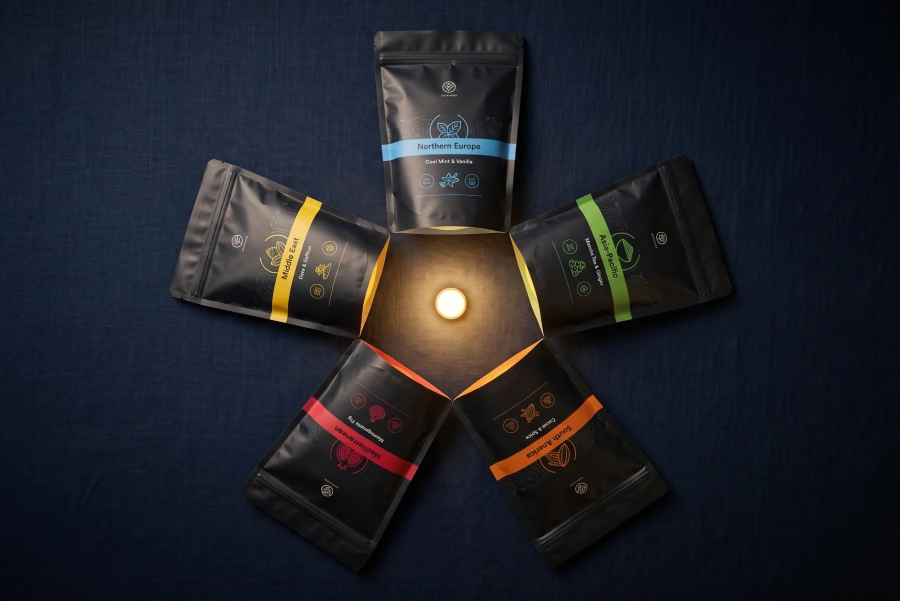
It would be easy to conclude that success means treating every market the same way. It is actually the opposite. A genuinely global ingredient succeeds because it can adapt locally without losing what makes it itself. In practice, that means:
- The underlying science and specification stay consistent from market to market.
- The flavour system respects local preference rather than exporting one country’s palate onto another.
- The commercial model fits the realities of each market instead of a single global template.
- Claims are approved for the specific region and product, every time, without exception.
- The customer receives real formulation and launch support, not a data sheet and a goodbye.
Why This Matters to Me Personally
I spent more than two decades living and working across China and Asia before any of this existed, building relationships across the global sports nutrition industry one conversation at a time. International growth does not come from translating a brochure into another language. It comes from showing up in person, listening more than you talk, and letting a market you do not fully understand yet push back on a product you are proud of.
Watching NiHPRO® move from the idea that started NiHTEK® in the first place into commercial products sitting on shelves across multiple continents is one of the more rewarding parts of running this company. The sales side matters because a business has to grow to survive. The learning side matters just as much, because every market that pushes back makes the platform stronger for the next one.
NiHPRO® is not becoming a global ingredient because every country wants the exact same protein product. It is becoming global because the underlying need is the same everywhere: better taste, better tolerance, real protein quality, broader suitability, and something people actually want to buy again.
Frequently Asked Questions
Where is NiHPRO® currently available around the world?
NiHPRO® is selling, launching, or moving through active commercial development in Japan, Australia, South Africa, Algeria and North Africa, the United Kingdom, continental Europe, and Chile, alongside additional markets not yet public. Status differs by country and should always be confirmed against current commercial records before being restated.
Why does the same protein perform differently in different countries?
Sensory expectations, existing product categories, manufacturing conditions and regulatory environments vary by market. A protein base that reads as smooth and premium in one country’s flavour system can read as thin or overly sweet in a market used to a different texture standard, which is why each region tests the platform on its own terms.
Is NiHPRO® formulated the same way in every market?
The underlying specification and science stay consistent, but flavour systems, claims and commercial models are adapted to each region. A global ingredient earns trust by adapting locally, not by forcing one country’s preferences onto another.
What role does NiHPRO®Gold play in this global expansion?
Why does South Africa matter more for reorders than for launch volume?
A first order can be driven by curiosity about a new ingredient story. Repeat orders only happen when the finished product performs well enough that a brand keeps buying it, which is why South Africa’s reorder pattern is treated as a stronger signal than the initial launch itself.